Sorry, your browser cannot access this site
This page requires browser support (enable) JavaScript
Learn more >

I’ve been using multiple devices for a long time — my own laptop, servers, NAS, company servers. All of them accessed via SSH clients. Honestly, logging into servers manually and typing out commands for cleanup, maintenance, and troubleshooting gets pretty tedious.

To save myself the trouble, I’ve been using opencode to do cleanup and maintenance work directly on the target machines. It works, sure, but there’s one unavoidable hassle: you have to install opencode on that machine first. You have to deal with environments, dependencies, keys, and if you also need to work inside containers, it gets even more annoying.

So I’ve been keeping an eye on tools like Wrap — SSH clients with built-in AI. But I didn’t want to pay extra just for that. Eventually I found Netcatty.
The way I star GitHub repositories is pretty much the same as how I like and collect videos on bilibili: I just click them on a whim. Whenever I see a project that looks even remotely interesting, my brain always goes “might be useful someday” or “I’ll take a look later” — and my finger clicks the button before my brain finishes the thought.

That’s how, over the years, my star count quietly climbed past 800. To be honest, I have no idea what those 800+ projects actually are — most of them were starred because they seemed useful back then, and then never opened again.

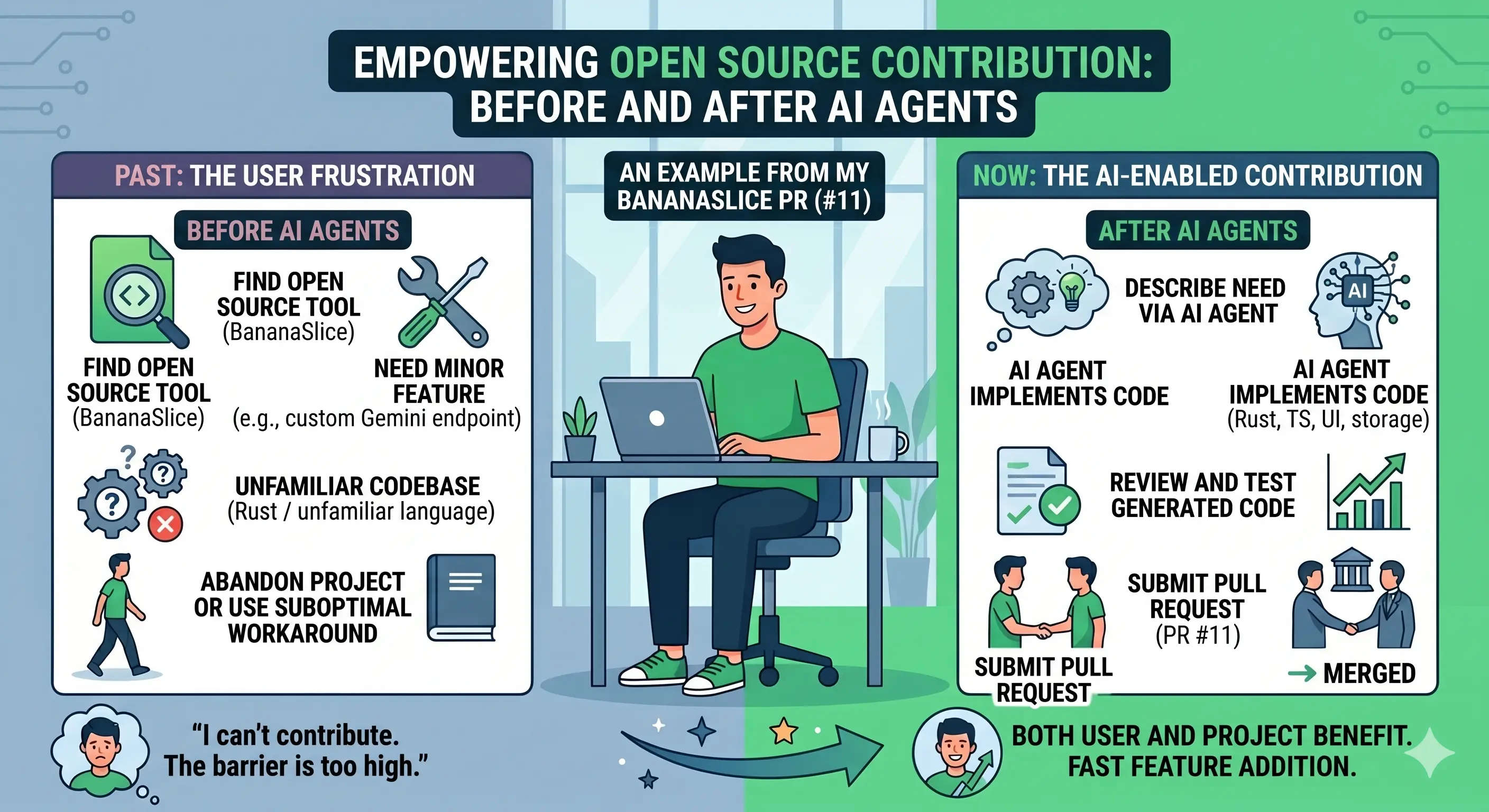
Recently I submitted a PR to BananaSlice (#11), adding configurable Gemini-compatible API endpoint support. The whole process made me realize: AI Agents not only help people write code faster, but also change how we leverage open source software.

banner

AI

Recently, I spent several days deeply experiencing multiple AI Agent products, from WorkBoddy, OpenClaw, LobeHub, DeerFlow2, LirbeChat, DingTalk Wukong to OpenCode, trying almost every tool I could find. Everyone has different needs, but my main focus is on open source and self‑deployable, feature completeness, and practical usability. Below is my personal comparison from a practical usage perspective.

I’ve been trying to use AI Agents / workflows to build efficient agent teams or AI workflows to improve productivity. After two weeks of experimentation, I’ve encountered several pitfalls…